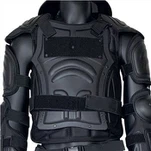
Stopping a bullet from penetrating is only one part of the protective equation. The other, equally critical, factor is managing the energy transferred to the body, measured as Backface Signature (BFS) or Backface Deformation (BFD). When a bullet strikes armor, it is stopped, but its kinetic energy causes the armor to deform inward toward the wearer's body. This creates a deep, localized dent. If this dent is too severe, it can cause catastrophic blunt force trauma, including broken bones, severe internal organ damage, and even death, without the armor ever being penetrated. The National Institute of Justice (NIJ) standard strictly limits this deformation. During certification testing, the armor is placed over a calibrated Roma Plastilina clay backing. After a shot, the depth of the dent in the clay is measured. To pass, the BFS must not exceed 44mm (1.73 inches). This ensures that while the impact will certainly cause a painful bruise, it will not result in life-threatening injuries, making BFS management a non-negotiable aspect of armor design.
Backface Signature (BFS) is the inward deformation of the back of an armor panel when struck by a bullet. It represents the transfer of kinetic energy to the wearer.
The NIJ standard uses Roma Plastilina clay as a simulant for human tissue to measure the depth of this deformation after a ballistic impact.
44mm Limit: The maximum allowable BFS depth is 44mm. Any deformation deeper than this fails the test, as it represents a high risk of lethal blunt force trauma.
Effective armor design must not only prevent penetration but also manage and minimize energy transfer to keep BFS within safe limits.